Shared references, separate assets
Applicable manufacturer documents can support product facts. They do not replace the identity of the installed unit or describe every modification and observation accumulated at its site.
 HVAIMeet your field loop ↗
Commercial HVAC focus
Keep the installed unit at the center, with manufacturer information, circuit measurements and service history in their proper places.
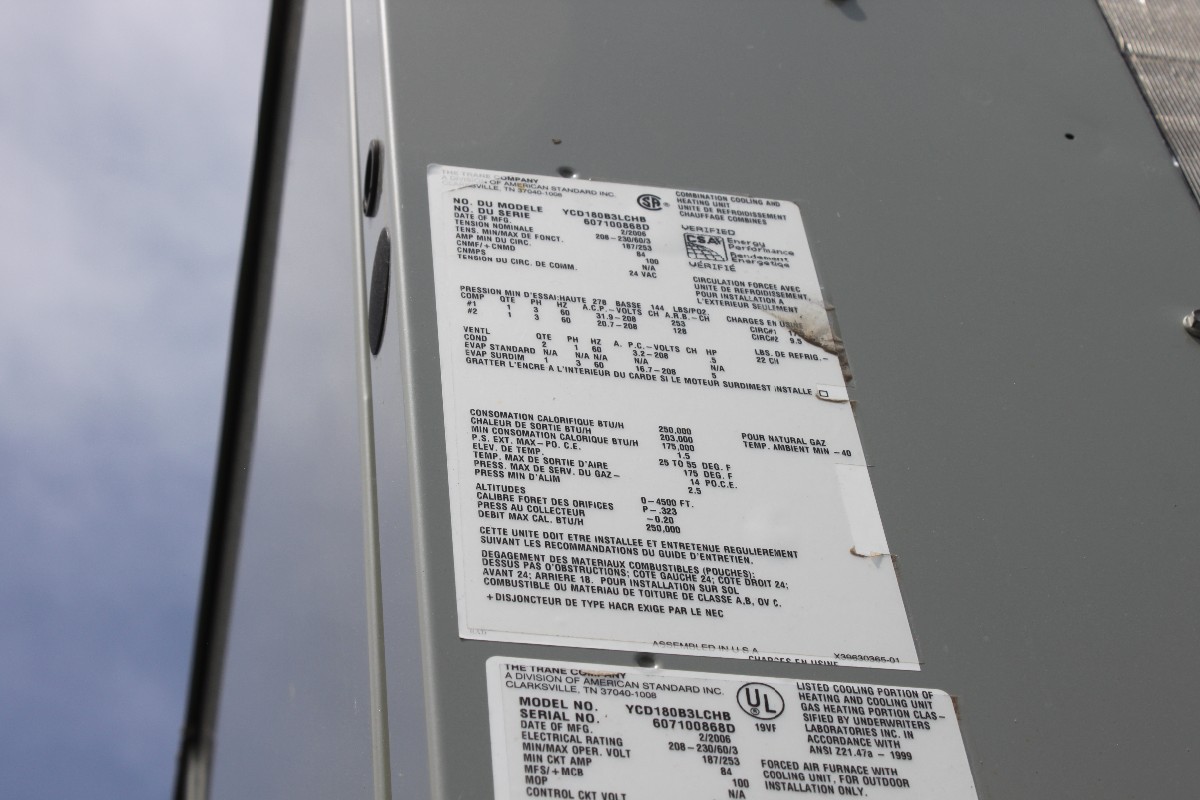
Equipment scope requires validationYCD180B3LCHB · Serial 607100868D. The original nameplate remains inspectable. Unsupported configuration facts stay unknown.
Inspect the original plate ↗One observed Trane sample, not brand-wide equipment coverage. The product visualization does not establish an applicable OEM configuration.
Equipment families / IN DEPTH
Purpose, prerequisites and the evidence that belongs to the task.
A site can contain several machines that look alike and share a model family. Each still has its own serial, options, component changes and service history. HVAI’s commercial HVAC thesis begins with that physical distinction. The rooftop-unit example is a useful way to explain the model: two similar units remain separate assets, and reviewing one must never redirect the other’s active readings or new photographs. It illustrates the intended behavior; it is not a coverage claim for every rooftop unit.
Applicable manufacturer documents can support product facts. They do not replace the identity of the installed unit or describe every modification and observation accumulated at its site.
A circuit, a compressor and a control stage are distinct. Measurement organization should follow confirmed circuit context rather than infer refrigerant paths from equipment labels or a changing value.
Useful evaluation begins with the exact model, configuration, operating mode and instruments. A broad equipment category is not enough to establish applicable references, telemetry support or a supported procedure.
Open a step to inspect what needs to stay clear.
Confirm the site, full model and serial. Preserve nameplate observations and technician review so similar equipment can be distinguished reliably.
Establish the relevant circuit and operating context. Keep unknown options or altered components visible instead of filling them from a generic family assumption.
Evaluate the manufacturer references and required input combinations for this task. A fact needs a source and a reason it applies to the selected configuration.
Keep today’s observations beneath the correct asset. Corrections should preserve earlier evidence, and the next visit should establish fresh readings.
The supplied brief does not establish an exhaustive supported-equipment catalog. Exact-model OEM coverage remains incomplete, and up to four active circuits is a product target. Additional equipment classes and operating configurations need their own scope and acceptance evidence.